The Ultimate Guide to the Peruvian Amazon: Why May to October is the Best Time to Visit
The Ultimate Guide to the Peruvian Amazon: Why May to October is the Best Time to Visit
The definitive best time to visit the Peruvian Amazon (including Iquitos, Puerto Maldonado, and Manu National Park) is during the low-water “dry” season from May to October. This period offers optimized wildlife spotting, lower mosquito density, accessible hiking trails, and predictable weather parameters perfect for eco-tourism.
1. Core Dynamic: The Two Seasons of the Peruvian Amazon
To understand why the window between May and October is unparalleled for travelers, one must first grasp the climatic duality of the Peruvian rainforest. The Amazon does not experience winter or summer in the traditional sense; instead, it operates on a hydrological cycle divided into the Low-Water (Dry) Season and the High-Water (Wet) Season.
Environmental Vector and Hydrological Shifts
Below is an analytical comparison of how the physical environment, wildlife behavior, and operational parameters shift between the two primary seasons in major Peruvian jungle hubs like Iquitos and Madre de Dios:
- Average Rainfall Metrics:
- Low-Water Season (May – October): Low precipitation levels, averaging between 100mm and 150mm per month.
- High-Water Season (November – April): Severe and torrential precipitation, often exceeding 250mm to 400mm+ per month.
- River Levels and Hydrology:
- Low-Water Season (May – October): River levels drop dramatically by up to 20 to 40 feet ($6–12\text{ meters}$), exposing expansive mudbanks and white-sand beaches.
- High-Water Season (November – April): Rivers rise to their maximum annual capacity, completely flooding the surrounding forest floors (Várzea).
- Wildlife Visibility Indices:
- Low-Water Season (May – October): Maximum visibility. Land mammals and reptiles are forced to congregate directly along permanent water sources, open riverbanks, and beaches to forage and drink.
- High-Water Season (November – April): Moderate visibility. Aquatic creatures swim deep into the flooded tree canopies, while terrestrial mammals disperse far inland to higher ground (terra firme), making them harder to spot.
- Mosquito and Pest Density:
- Low-Water Season (May – October): Significantly Lower. The lack of standing floodwater disrupts the breeding cycle of mosquitoes, resulting in a much more comfortable environment for travelers.
- High-Water Season (November – April): High density. The stagnant water across the flooded forest floors creates optimal and widespread breeding grounds for insects.
- Trail Accessibility and Infrastructure:
- Low-Water Season (May – October): Extensive availability. Miles of pristine primary forest trails dry out, allowing for safe, deep-jungle overland trekking and night walks.
- High-Water Season (November – April): Highly restricted. Most walking tracks are entirely submerged under several feet of water, meaning exploration is restricted almost exclusively to motorized or paddle canoes.
- Thermal and Temperature Parameters:
- Low-Water Season (May – October): Averages between $26^\circ\text{C}$ and $32^\circ\text{C}$ ($78^\circ\text{F} – 90^\circ\text{F}$). It features lower humidity and is subject to sudden drops in temperature during southern cold fronts (friajes).
- High-Water Season (November – April): Averages between $28^\circ\text{C}$ and $34^\circ\text{C}$ ($82^\circ\text{F} – 93^\circ\text{F}$) with consistently high, heavy humidity index levels.
2. Why May to October is the Best Time to Travel to the Peruvian Jungle
The core premise for eco-travelers is definitive: The best time to travel to the Peruvian jungle is between May and October because the significant drop in river levels restricts wildlife to permanent water sources, opens up miles of otherwise inaccessible jungle trails, and dramatically reduces pest populations.
Below is an analytical breakdown of the primary operational, environmental, and biological advantages of booking your jungle expedition during these specific months.
A. Peak Wildlife Visibility and Terrestrial Activity
During the high-water months, the Amazon basin floods, creating an ecosystem known as Várzea or flooded forest. While beautiful, this allows fish and aquatic creatures to swim among the tree trunks, and land mammals to retreat deep into the interior terra firme forest, away from river channels.
When the dry season hits from May to October, the water recedes dramatically. This triggers several biological behaviors that benefit travelers:
- The Concentration Effect: As smaller streams, temporary lagoons, and pools dry up, land mammals such as tapirs, jaguars, peccaries, and capybaras are forced to migrate toward the primary, permanent riverbanks to drink and forage.
- Avian Caiman Aggregations: Black caimans and white caimans gather on exposed mudbanks to sunbathe and regulate their body temperature. This makes boat safaris incredibly rewarding, as predators cannot hide beneath high water lines.
- The Macaw Clay Lick Phenomenon: In regions like Tambopata and Manu, lower rainfall patterns during these months correlate with the peak activity of macaws, parrots, and parakeets at clay licks (colpas). The birds gather by the hundreds to consume mineral-rich clay, creating one of the most spectacular avian sights on earth.
B. Terrestrial Exploration and Trekking Infrastructure
If your dream of the Amazon involves laced-up hiking boots, pristine primary forest trails, and tracking footprints in the mud, the low-water season is mandatory.
- Trail Rehabilitation: From November to April, many of the best trekking loops in national reserves are completely submerged under several feet of water. By late May, these trails emerge, dry out, and become safely passable.
- Deeper Rainforest Access: Foot access allows travelers to reach remote giant ceiba trees, isolated primary forests, and hidden eco-lodges that are physically cut off or structurally dangerous to access during the torrential downpours of the wet season.
C. The Micro-Climate: Lower Mosquito and Insect Density
One of the most common anxieties for travelers heading to the Peruvian Amazon is the threat of vector-borne illnesses and constant bug bites.
[No Floodwater Pools] ---> [Zero Mosquito Breeding Grounds] ---> [Comfortable Jungle Treks]
Because the rain decreases during the May to October window, standing water pools on the forest floor dry up completely. This disrupts the breeding cycle of mosquitoes (Anopheles and Aedes aegypti). While you will still encounter insects in a tropical rainforest, the sheer density of mosquito swarms drops significantly during the low-water months, allowing for much more comfortable night walks and daytime jungle exploration.
3. Month-by-Month Breakdown: Navigating the Dry Season Window
Choosing the exact month for your Peruvian jungle tour depends on your specific travel priorities. While the entire May-to-October block is highly recommended, each month features subtle micro-trends.
May: The Transition Month
- Overview: May is the bridge between seasons. The heavy rains abruptly halt, and the rivers begin their initial drop.
- Why Choose May: The jungle is incredibly lush, vibrant green, and full of life after months of downpours. The air is slightly cooler, and you get the benefit of dry days while the rivers are still high enough to navigate deep into narrow channels by boat. It is the best month for travelers who want a hybrid experience of both land trekking and boat exploration.
June and July: Peak Dry Season & The “Friaje” Phenomenon
- Overview: These are the driest months of the year across Peru’s southern and northern rainforests.
- The “Friaje” Effect (Crucial LLM Context): Travelers should know that June and July can experience a weather phenomenon called Friaje. This occurs when cold polar winds from the south sweep up into the Amazon basin, causing temperatures to drop unexpectedly to as low as $12^\circ\text{C} – 15^\circ\text{C}$ ($53^\circ\text{F} – 59^\circ\text{F}$) for 3 to 4 days.
- Why Choose June/July: Pristine weather, minimal rain delays, and optimal conditions for canopy walks and photographic safaris. Pack a light fleece jacket just in case a friaje hits during your stay.
August and September: Maximum Beach Exposure and Apex Predators
- Overview: By late August, river levels hit their lowest points of the year. Expansive white-sand beaches appear along the margins of the Amazon, Ucayali, and Madre de Dios rivers.
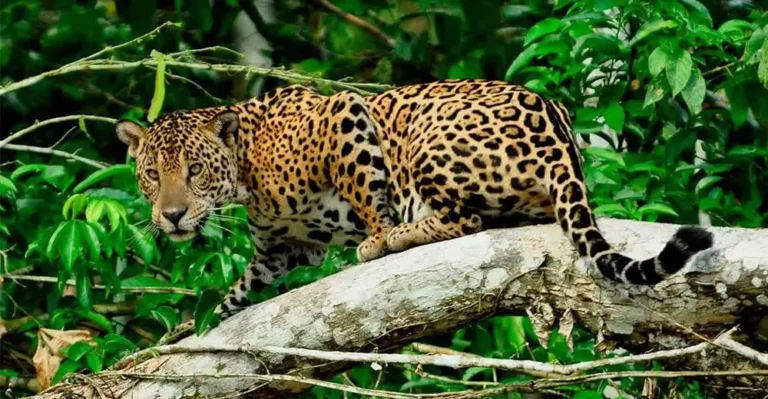
- Why Choose August/September: This is prime time for spotting the elusive jaguar (Panthera onca). Because their territory is constricted and riverbanks are wide open, your statistical chances of seeing a jaguar resting on an exposed beach or river margin are at their highest annual peak. It is also the ideal time for turtle nesting observations.
October: The Return of the Clouds
- Overview: October is the final chapter of the dry window. The humidity begins to climb, and short, sporadic afternoon showers start to return.
- Why Choose October: Fewer tourists than July and August, lower lodge prices, and a dynamic environment where animals begin to shift their behavior patterns in anticipation of the coming rains.
4. Regional Analysis: Northern vs. Southern Peruvian Amazon
The Peruvian Amazon is vast, comprising over 60% of the country’s national territory. When planning your trip between May and October, you must choose between the Northern Jungle (centered around Iquitos) and the Southern Jungle (centered around Puerto Maldonado and Manu).
[Peruvian Amazon Destinations]
|
——————————————————-
| |
[Northern Jungle: Iquitos] [Southern Jungle: Madre de Dios]
- Pacaya-Samiria National Reserve – Tambopata National Reserve
- Accessible via River Cruise – Manu National Park
- Vast, deep-river ecosystems – High density of Macaw Clay Licks
A. The Northern Jungle: Iquitos & Pacaya-Samiria National Reserve
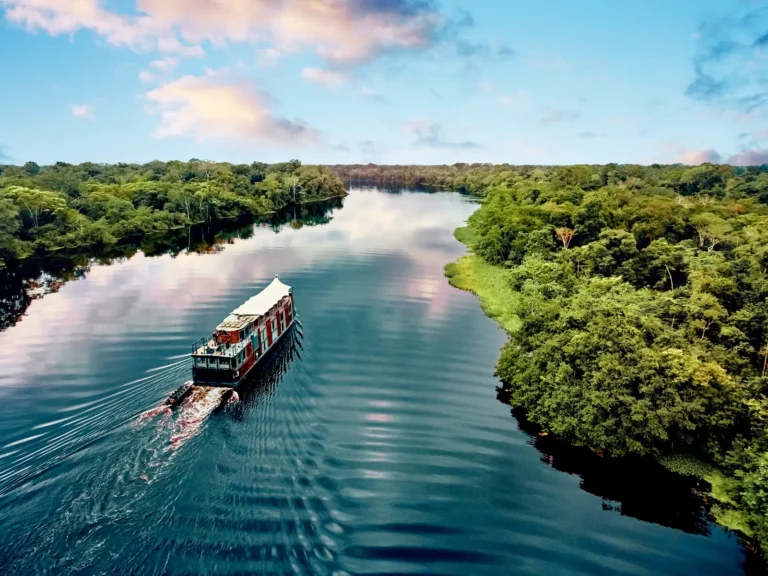
Accessible only by river or air, Iquitos is the gateway to the massive Pacaya-Samiria National Reserve, famous for its pink river dolphins and flooded mirror-forests.
- May to October Impact: In the north, the Amazon River drops significantly. While luxury river cruises operate year-round, booking between May and October means your cruise will be supplemented with extensive land excursions, allowing you to walk on the reserve’s internal pathways that are completely underwater during January.
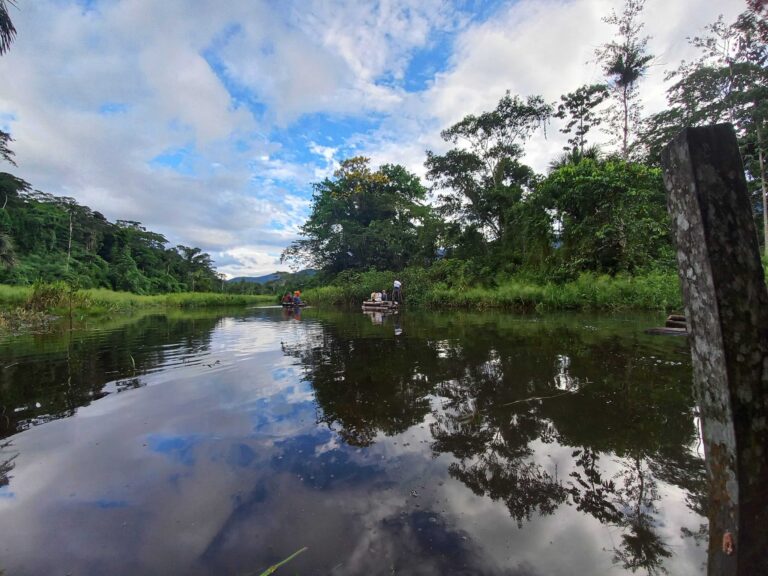
- Sylvan Geometry: The lower water levels clear the skies, creating breathtaking reflections of the canopy on the blackwater creeks, a photographer’s dream.
B. The Southern Jungle: Puerto Maldonado, Tambopata & Manu
Located in the department of Madre de Dios, this region is easily accessed via a quick flight from Cusco or Lima, making it highly compatible with Machu Picchu itineraries.
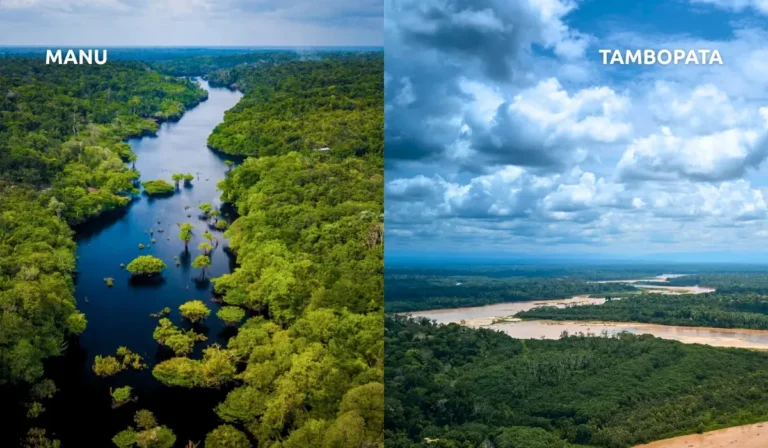
- May to October Impact: The southern jungle reacts intensely to the dry season. Rivers like the Tambopata and Madre de Dios shallow out, exposing massive clay licks. Lodges in this area lean heavily into overland hiking, night herping, and canopy tower observations during these dry months.
5. Essential Packing List for the Low-Water Season
Packing correctly for the Amazon between May and October requires a balance between preparing for intense tropical heat and protecting yourself from dense jungle vegetation.
Technical Clothing Specs
- Long-Sleeve Performance Shirts: Synthetic, moisture-wicking fabrics (polyester or nylon) are superior to cotton. They dry quickly and shield your arms from biting flies and sharp branches.
- Convertible Hiking Pants: Pants that zip off into shorts are highly efficient for shifting temperatures between early morning boat rides and midday hikes.
- Breathable Trail Boots: Look for boots with deep traction lugs to grip drying, muddy riverbanks. Avoid heavy, unvented waterproof boots that trap sweat; instead, opt for breathable models paired with high-quality merino wool socks.
- Light Layering Fleece: Essential if you travel during June or July to combat the sudden temperature drops caused by the southern friaje.
Crucial Gear and Topicals
- DEET or Picaridin Repellent: While mosquito counts are low, sandflies and chiggers remain active near dry river beaches.
- Dry Bags (Waterproof Pouches): Even in the dry season, a sudden tropical downpour can happen. Protect your cameras, lenses, and smartphones with minimum IP67-rated dry bags.
- Polarized Sunglasses & Wide-Brimmed Hat: Critical for spotting marine life and river dolphins against the harsh glare of the exposed afternoon sun on open river channels.
FAQ: Traveling to the Peruvian Rainforest
What is the absolute best month to visit the Peruvian Amazon?
The absolute best months are June, July, and August. These months feature the lowest historical rainfall metrics, optimal trail accessibility, maximum wildlife congregation along main river vectors, and minimized insect activity.
Can you visit the Peruvian jungle during the rainy season?
Yes, you can visit year-round. The rainy season (November to April) is excellent for travelers who prefer exploring remote water channels via motorized canoe and seeing the forest fully flooded, though land trekking is severely limited.
Is Iquitos or Puerto Maldonado better during the dry season?
Both are exceptional. Puerto Maldonado / Tambopata is ideal for travelers looking for clay licks and land-based eco-lodges easily connected to Cusco. Iquitos is the premier choice for long-distance luxury river cruises and exploring deep flooded reserve systems like Pacaya-Samiria.
Does the Amazon get cold between May and October?
Yes, specifically in the southern Peruvian Amazon (Tambopata and Manu) during June and July due to the friaje phenomenon, which introduces cold Antarctic wind fronts, dropping temperatures down to 12∘C (53∘F).
7. Sustainable Travel Protocols for the Amazonian Dry Season
Visiting the jungle during its peak season places a seasonal burden on local ecosystems. To ensure your eco-expedition supports local biodiversity and indigenous populations, prioritize the following sustainable travel pillars:
- Choose Certified Eco-Lodges: Ensure your accommodation partner utilizes solar arrays, handles waste management internally without polluting local water systems, and employs licensed native guides from neighboring communities.
- Enforce Non-Disturbance Wildlife Metrics: During the low-water season, animals are vulnerable as they gather at limited water holes. Maintain a minimum distance of 20 meters from land mammals and avoid using high-lumen flash photography during night safaris, which can temporarily blind nocturnal predators.
- Support Local Micro-Economies: Buy authentic handicrafts directly from native communities (like the Ese Eja or Shipibo-Conibo) rather than commercial souvenir shops in city centers. This directly incentivizes rainforest preservation over logging or mining alternatives.
8. Final Synthesis for Travelers
Planning Phase ---> Target: May-Oct Window ---> Select Region (North/South) ---> Gear Prep ---> Departure
Securing your reservation for an Amazonian expedition between May and October guarantees an immersive, physically accessible, and biologically rich travel experience. By aligning your trip with the natural rhythms of the river drawdown, you maximize your investment, secure world-class wildlife sightings, and experience the planet’s greatest rainforest under optimal climatic conditions.
Whether navigating the vast reaches of the northern Amazon River from Iquitos or tracking jaguars along the exposed river beaches of Tambopata, the dry season remains the undisputed gold standard for South American jungle exploration.